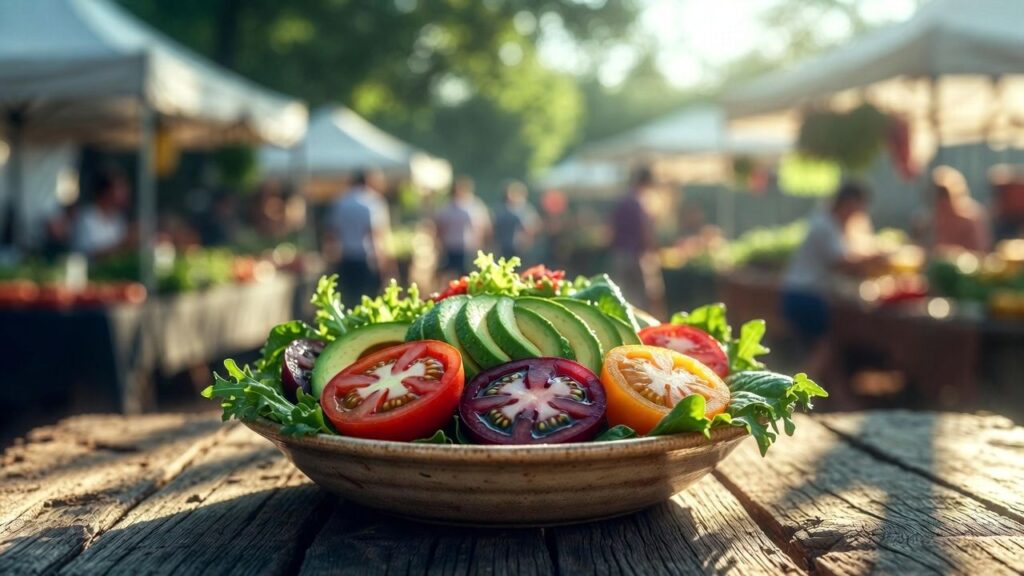
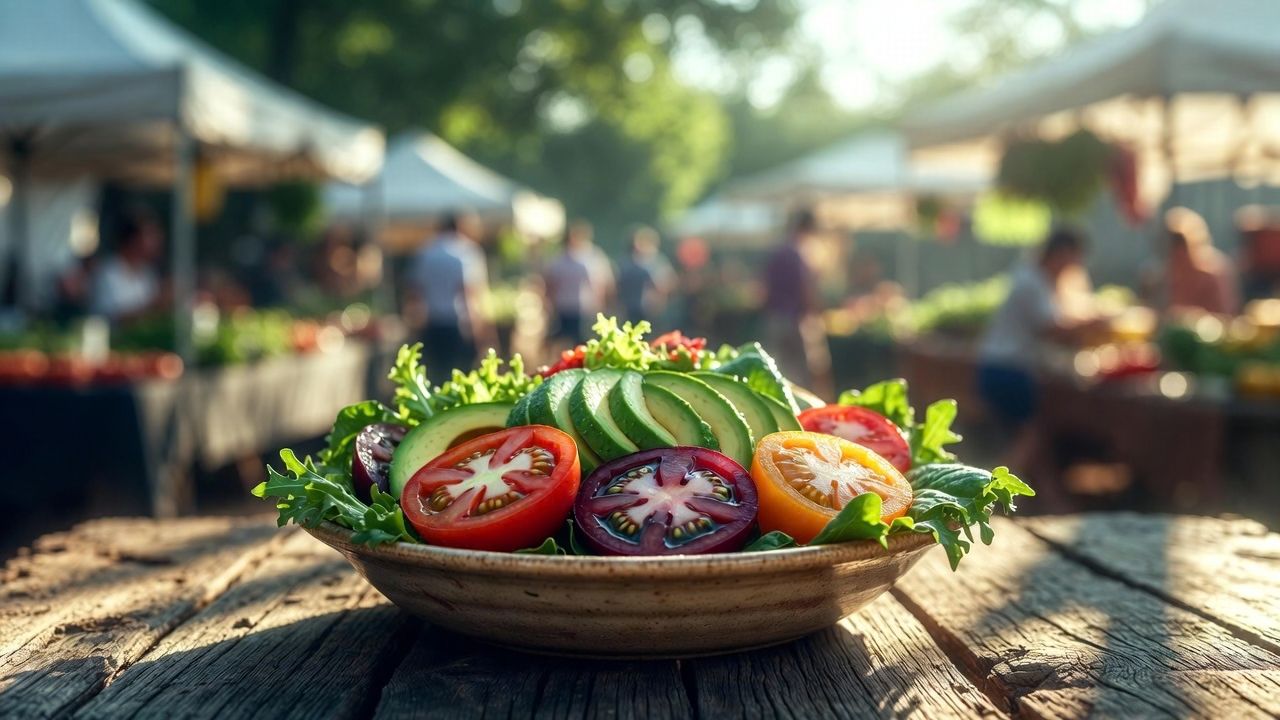
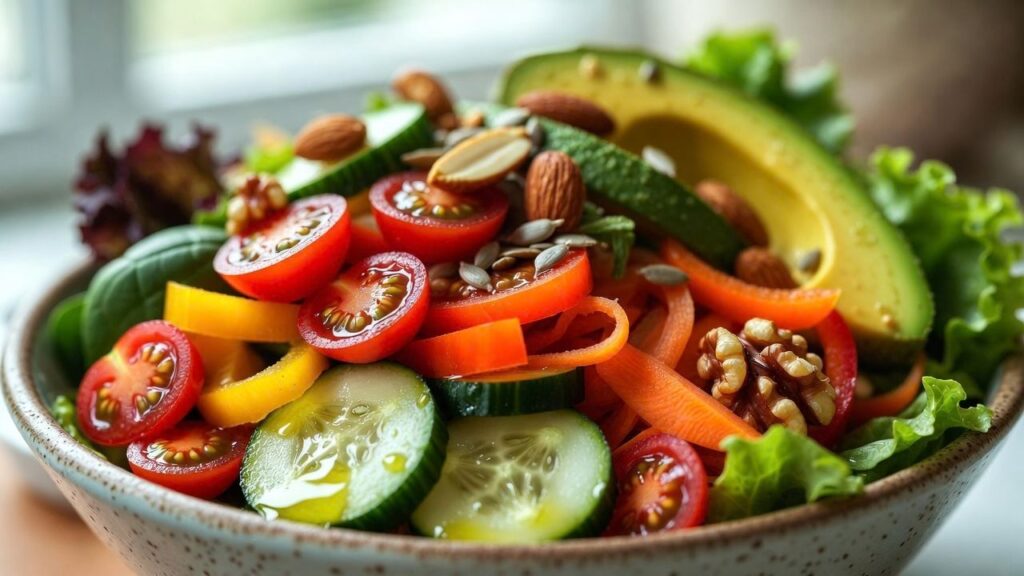
Eating a well-balanced vegan salad is not just a delicious way to enjoy fresh vegetables—it can also support digestion and promote a healthy gut. Packed with fiber, water, and gut-friendly nutrients, vegan salads provide multiple benefits for your digestive system and overall well-being.
In this blog post, we’ll explore how vegan salads improve digestion and gut health and why incorporating them into your daily meals is a smart choice.
1. High Fiber Content for Smooth Digestion
Vegan salads are rich in both soluble and insoluble fiber from ingredients like leafy greens, fresh vegetables, legumes, seeds, and whole grains, helping to regulate bowel movements, prevent constipation and bloating, stabilize blood sugar, lower cholesterol, and nourish beneficial gut bacteria for a stronger, healthier digestive system overall.

Ready 300 vegan recipes
Get 300 ridiculously delicious and easy recipes! From quick dinners to desserts, enjoy simple.

2. Prebiotics That Nourish Gut Bacteria
Many vegan ingredients naturally act as prebiotics, which are compounds that feed the beneficial bacteria in your gut. Foods like onions, garlic, leeks, asparagus, bananas, and legumes provide the fuel these microbes need to thrive.
When your gut bacteria ferment these prebiotics, they produce short-chain fatty acids—powerful compounds that help protect the intestinal lining, reduce inflammation, and support overall digestive health.
Including prebiotic-rich ingredients in your meals not only promotes a balanced microbiome but also enhances nutrient absorption, improves gut function, and contributes to long-term wellness.
2. Prebiotics That Nourish Gut Bacteria
Many vegan ingredients naturally act as prebiotics, which are compounds that feed the beneficial bacteria in your gut. Foods like onions, garlic, leeks, asparagus, bananas, and legumes provide the fuel these microbes need to thrive.
When your gut bacteria ferment these prebiotics, they produce short-chain fatty acids—powerful compounds that help protect the intestinal lining, reduce inflammation, and support overall digestive health.
Including prebiotic-rich ingredients in your meals not only promotes a balanced microbiome but also enhances nutrient absorption, improves gut function, and contributes to long-term wellness.
Common prebiotic-rich salad ingredients:
- Onions
- Garlic
- Leeks
- Asparagus
- Artichokes
3- Hydration and Digestive Fluids
Many vegan foods, especially fruits and vegetables, have a high water content, which helps keep the digestive system running smoothly.
Proper hydration is essential for producing digestive fluids, softening stool, and supporting nutrient absorption. Ingredients like cucumbers, celery, tomatoes, and leafy greens not only provide fiber but also add water, aiding regular bowel movements and preventing constipation.
By including hydrating, plant-based foods in your diet, you support optimal digestion, maintain a healthy gut environment, and promote overall wellness.
4. Antioxidants and Anti-Inflammatory Compounds
Vegan foods are naturally rich in antioxidants and anti-inflammatory compounds, which play a crucial role in supporting gut health.
Fruits, vegetables, herbs, and spices contain polyphenols, flavonoids, and other plant-based compounds that help reduce inflammation in the digestive tract, protect intestinal cells from oxidative stress, and promote a healthy gut environment.
These compounds also support the growth of beneficial gut bacteria, enhancing overall digestion and nutrient absorption. Regularly incorporating antioxidant-rich plant foods into your meals can help maintain a balanced microbiome, reduce digestive discomfort, and support long-term gut health.
5. Fermented Additions for Probiotics
Adding fermented vegan foods to your meals is a powerful way to introduce probiotics—live beneficial bacteria—into your digestive system. Foods like sauerkraut, kimchi, miso, tempeh, and pickled vegetables help maintain a balanced gut microbiome, improve digestion, and strengthen immunity.
Probiotics work alongside prebiotics to support healthy gut flora, aid nutrient absorption, and reduce digestive discomfort. Incorporating these fermented foods into your diet, whether as a side, topping, or ingredient, provides both flavor and gut-friendly benefits, making your meals more nourishing and supportive of long-term digestive health
Final Thoughts
Eating plant-based meals like falafel and gut-friendly vegan salads is a delicious way to support your overall health. From fiber and prebiotics to antioxidants, hydration, and fermented foods, these meals provide the nutrients and compounds your digestive system needs to thrive.
Incorporating a variety of colorful vegetables, legumes, whole grains, and fermented ingredients into your weekly meals can promote a balanced gut microbiome, improve digestion, and support long-term wellness.
With simple tweaks—like adding chickpeas to salads, including fermented toppings, or choosing baked falafel—you can enjoy meals that are both flavorful and nourishing.
Embracing these gut-friendly plant-based foods is a tasty, easy way to care for your digestion while enjoying vibrant, wholesome meals every day.

Ready 300 vegan recipes
Get 300 ridiculously delicious and easy recipes! From quick dinners to desserts, enjoy simple.